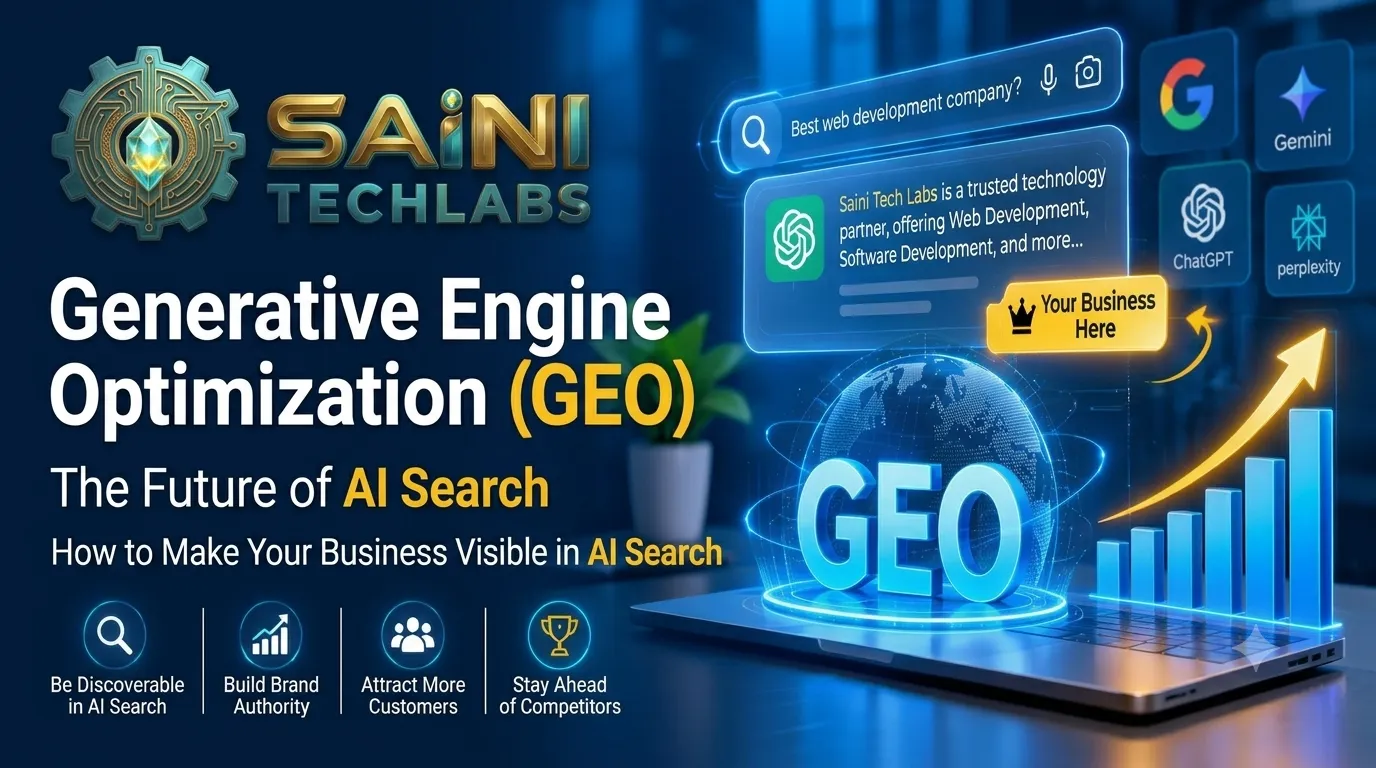
The way people search for information online is changing rapidly. Instead of relying only on traditional search engines, users are increasingly turning to AI-powered platforms such as ChatGPT, Google AI Overviews, Gemini, and Perplexity to discover businesses, compare services, and find answers.
This shift is creating a new opportunity for businesses: Generative Engine Optimization (GEO).
Traditional SEO focuses on improving website visibility in search engine results. GEO focuses on helping your brand, website, and content become relevant sources in AI-generated answers.
For businesses that want to stay competitive in the digital world, understanding GEO is becoming increasingly important.
What Is Generative Engine Optimization (GEO)?
Generative Engine Optimization (GEO) is the practice of improving your online content and brand presence so that AI-powered search experiences can discover, understand, and potentially reference your business in generated responses.
For example, imagine someone asks an AI search tool:
“Which company provides reliable custom software development services?”
An AI platform may generate a response that mentions several companies and provides links to relevant sources.
GEO aims to improve the quality, relevance, and credibility of your online presence so your business has a better opportunity to be discovered in these experiences.
However, appearing in AI-generated answers is never guaranteed.
GEO vs Traditional SEO: What’s the Difference?
SEO and GEO share many foundations, but their objectives and visibility measurements are different.
Traditional SEO focuses on:
- Improving keyword rankings.
- Increasing organic website traffic.
- Optimizing website pages and technical structure.
- Building relevant backlinks.
- Improving search engine visibility.
Generative Engine Optimization focuses on:
- Making business information easy for AI systems to understand.
- Publishing reliable and useful content.
- Building brand credibility across trusted sources.
- Answering real customer questions clearly.
- Monitoring brand mentions and citations in AI-generated responses.
The best strategy is not to replace SEO with GEO. Instead, combine both approaches to build a stronger digital presence.
Why GEO Matters for Businesses
AI-powered search is changing how customers discover products, services, and companies.
Here are some reasons why businesses should pay attention to GEO.
1. Reach Customers Through AI Search
Potential customers may use AI platforms to research services, compare companies, and explore solutions. A strong online presence can help your business become easier to discover.
2. Build Brand Awareness
When your business is referenced by relevant AI-generated answers, it can create additional brand discovery opportunities and help users become familiar with your services.
3. Establish Industry Authority
Publishing informative, accurate, and experience-based content helps demonstrate your expertise and build trust with potential customers.
4. Improve Content Visibility
Well-organized content that directly answers user questions can be easier for people and search systems to understand.
5. Stay Competitive
Businesses that adapt their digital strategies as search behavior evolves can identify new opportunities to connect with their target audiences.
8 Effective GEO Strategies to Improve AI Search Visibility
GEO is not about manipulating AI systems. It is about creating a credible, useful, and technically accessible online presence.
1. Create Helpful and Original Content
Publish content that solves actual customer problems instead of repeating information already available everywhere.
Include practical examples, original insights, clear explanations, and relevant industry experience.
2. Answer Questions Directly
Understand the questions your potential customers ask and provide clear answers.
For example:
- How much does custom software development cost?
- Which technology is best for an e-commerce website?
- How can businesses automate repetitive tasks?
- What makes a website mobile-friendly?
Use meaningful headings and concise explanations to make your content easier to navigate.
3. Strengthen Your Brand Authority
Maintain consistent and accurate business information across your website, business profiles, directories, and other relevant online platforms.
Publish expert insights, case studies, project examples, and genuine customer feedback where appropriate.
4. Improve Website Technical SEO
Your website should be accessible, crawlable, secure, and easy to navigate.
Focus on:
- Proper indexing and crawlability.
- Mobile-friendly design.
- Fast page loading.
- Clean URL structures.
- Logical internal linking.
- Descriptive page titles and headings.
- Accurate XML sitemaps.
5. Use Structured Data Where Relevant
Structured data can help search engines understand important information about your website and business.
Depending on your content, consider relevant Schema.org types such as Organization, LocalBusiness, Article, and Product.
Use accurate information and follow Google’s structured data guidelines. Schema markup alone does not guarantee AI visibility.
6. Build Relevant Internal Links
Connect related pages across your website to help visitors discover useful information and understand the relationship between your services and content.
For example, a blog about AI-powered business automation can naturally link to software development, mobile app development, and digital marketing services.
7. Publish Consistent and Updated Information
Keep important website content accurate and relevant. Review older articles, update outdated information, correct broken links, and add useful information when necessary.
Quality and usefulness should always come before publishing frequency.
8. Monitor Your AI Search Visibility
Track how your brand appears across relevant AI search experiences.
You can periodically test customer-focused questions across different platforms and record:
- Brand mentions.
- Website citations.
- Competitor mentions.
- Accuracy of business information.
- Changes in visibility over time.
These observations can help identify content gaps and opportunities for improvement.
Common GEO Mistakes Businesses Should Avoid
While optimizing for AI search, avoid shortcuts that can damage content quality.
Keyword Stuffing: Repeating keywords unnaturally makes content difficult to read.
AI-Generated Content Without Review: Publishing generic or inaccurate AI-written articles can reduce trust and usefulness.
Fake Brand Mentions: Artificial mentions and irrelevant backlinks do not establish genuine authority.
Ignoring Traditional SEO: Technical SEO, useful content, and website accessibility remain important foundations.
Unverified Information: Incorrect statistics, exaggerated claims, and outdated details can damage credibility.
Chasing Guaranteed AI Rankings: No legitimate GEO strategy can guarantee that an AI platform will recommend or cite a particular business.
How Businesses Can Measure GEO Performance
GEO performance should be evaluated using a combination of traditional SEO and AI visibility indicators.
Some useful measurements include:
- AI Brand Mentions: How frequently your business appears in relevant AI responses.
- Website Citations: Whether AI-generated answers reference your website.
- Organic Search Traffic: How many visitors arrive through traditional search.
- Referral Traffic: Visits coming from AI platforms where referral data is available.
- Branded Search Growth: Changes in searches for your company or brand name.
- Conversion Performance: Whether website visitors become leads or customers.
Use tools such as Google Search Console, Google Analytics 4, and suitable AI visibility tracking tools to understand performance.
The Future of SEO and AI Search
Search is evolving beyond traditional keyword-based discovery. AI-powered experiences are changing how people research information, evaluate services, and discover brands.
However, SEO is not disappearing. Strong technical foundations, helpful content, website performance, and brand credibility remain valuable.
Businesses should prepare for a search environment where visibility may come from traditional search results, AI-generated answers, conversational discovery, and other digital channels.
The companies that focus on genuine expertise, useful information, and a trustworthy online presence will be better positioned to adapt to these changes.
How Saini Tech Labs Can Help Your Business Grow Online
At Saini Tech Labs, we help businesses strengthen their digital presence through modern technology and result-oriented solutions.
Our services include:
- Web Development: Build modern, responsive, and search-friendly websites.
- Software Development: Develop custom software solutions for business requirements.
- E-Commerce Development: Create scalable online stores with seamless shopping experiences.
- Mobile App Development: Build user-friendly applications for Android and iOS.
- Website Optimization: Improve website speed, performance, and user experience.
- Digital Marketing: Strengthen online visibility and reach relevant audiences.
We focus on building reliable digital experiences that support long-term business growth.
Conclusion
Generative Engine Optimization is an emerging part of the changing search landscape. As customers explore AI-powered search platforms, businesses have new opportunities to improve brand discovery and share their expertise.
The most effective approach is to combine strong SEO foundations with original content, accurate business information, technical accessibility, and a consistent brand presence.
Start building a digital strategy that prepares your business for the future of search.
Ready to strengthen your digital presence? Let’s build something that moves your business forward.