Passwords have been the standard way to protect online accounts for decades. From business applications and e-commerce websites to mobile apps and customer portals, users have traditionally relied on passwords to access their accounts.
However, passwords come with several security challenges. Weak passwords, reused credentials, phishing attacks, and stolen login details can put businesses and customers at risk.
A new authentication technology called Passkeys is changing how people sign in to websites and applications.
Instead of remembering and entering passwords, users can authenticate using their device’s fingerprint, facial recognition, or screen lock.
As passwordless authentication gains adoption, businesses have an opportunity to improve account security and create smoother login experiences.
In this article, we will explore what passkeys are, how they work, their benefits, and why businesses should consider adopting them.
What Are Passkeys?
Passkeys are a modern passwordless authentication method based on public-key cryptography.
They allow users to sign in to supported websites and applications without entering a traditional password.
A passkey uses two cryptographic keys:
- Public Key: Stored by the website or application to verify the user’s authentication.
- Private Key: Securely maintained by the user’s device or credential manager and used to prove the user’s identity.
When a user signs in, their device verifies the authentication request using a fingerprint, facial recognition, PIN, or another supported screen-lock method.
The private key is not shared with the website during the authentication process.
This approach helps protect users against common password-related attacks, especially phishing.
How Do Passkeys Work?
Passkeys use a process based on public-key cryptography and the WebAuthn authentication standard.
Here is a simplified explanation:
1. User Registers an Account
When a user creates an account or enables passkeys, the website requests a new passkey from the user’s device.
2. Device Creates Cryptographic Keys
The device generates a public-private key pair for that website or application.
The public key is registered with the service, while the private key remains protected by the authenticator.
3. User Starts the Login Process
When the user returns, the website sends an authentication challenge.
4. Device Verifies the User
The user approves the request through fingerprint recognition, facial recognition, PIN, or another supported method.
5. Secure Authentication Is Completed
The device uses the private key to produce a cryptographic response. The website verifies it using the registered public key and grants access if the response is valid.
This process removes the need to transmit a reusable password during login.
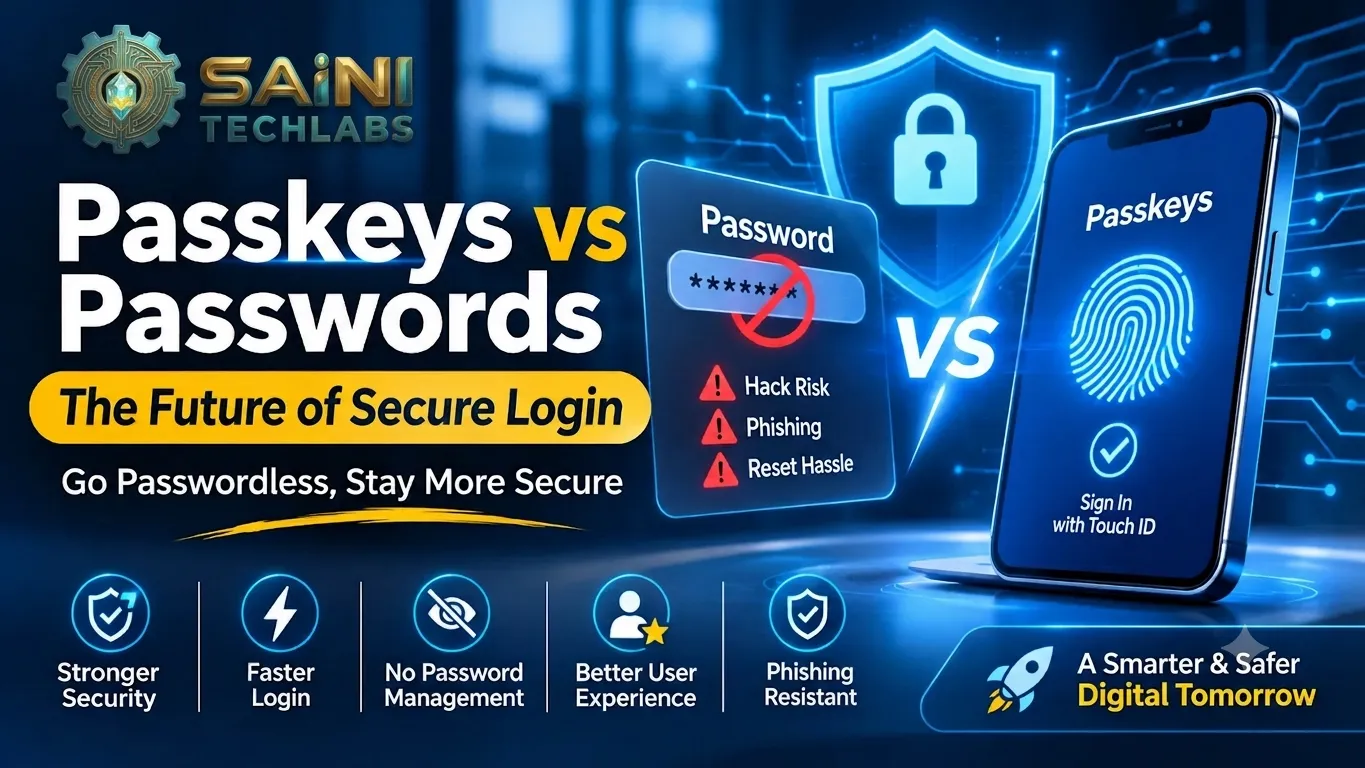
Passkeys vs Traditional Passwords
Both methods are designed to protect user accounts, but their authentication processes are different.
Traditional Password Authentication
- Users create and remember passwords.
- Passwords are entered during login.
- Reused or weak passwords can increase security risks.
- Fake login pages can trick users into revealing credentials.
- Password resets can create additional support work.
Passkey Authentication
- Users authenticate without entering a traditional password.
- Device-based verification makes login more convenient.
- Public-key cryptography protects authentication credentials.
- Passkeys are designed to resist phishing.
- Supported devices and credential managers can simplify sign-in.
Passkeys do not eliminate every security risk. Account recovery, device security, and implementation quality remain important.
Why Passkeys Matter for Businesses
Businesses increasingly depend on digital platforms to manage customer accounts, payments, employee access, and sensitive information.
Passkeys can improve the authentication experience while reducing several risks associated with traditional passwords.
1. Stronger Protection Against Phishing
Traditional passwords can be stolen through fake websites and phishing messages.
Passkeys are tied to the website’s legitimate origin, helping prevent their use on fraudulent lookalike domains.
2. Faster Login Experience
Users do not need to remember or manually enter complex passwords every time they sign in.
Authentication can be completed through a familiar device verification process.
3. Reduced Password Management
Businesses can reduce dependence on password resets and password-related support processes by offering passwordless authentication.
4. Better Customer Experience
A simpler login experience can remove unnecessary friction when customers access websites, applications, and online stores.
5. Improved Account Security
Passkeys use cryptographic authentication rather than relying on a shared password that users repeatedly enter across websites.
Where Can Businesses Use Passkeys?
Passkeys can be useful across different types of digital platforms.
1. E-Commerce Websites
Online stores can offer passkey sign-in to make customer account access easier and more secure.
Customers can access their accounts, view orders, and manage their profiles without repeatedly entering passwords.
2. Banking and Financial Applications
Financial platforms can use strong authentication methods to help protect sensitive accounts and transactions.
Additional transaction verification and risk controls may still be required.
3. Business Software
Enterprise applications, employee portals, and management systems can use passkeys as part of a broader identity and access management strategy.
4. Mobile Applications
Mobile apps can integrate passkey authentication to provide convenient sign-in experiences across supported devices.
5. Customer Portals
Businesses offering subscription services, booking platforms, or customer dashboards can use passwordless authentication to simplify account access.
7 Important Steps to Implement Passkeys
Businesses should plan passkey adoption carefully to ensure security, compatibility, and a smooth user experience.
1. Evaluate Your Existing Authentication System
Review your current login process, user database, authentication methods, and account recovery workflows.
Identify where passkeys can provide the most value.
2. Choose the Right Technology
Use established standards such as WebAuthn and FIDO2 rather than building a custom cryptographic authentication system.
3. Implement Secure Registration
Create a secure registration process that verifies the existing user’s identity before allowing a new passkey to be added.
4. Support Multiple Devices
Consider how users will access accounts across smartphones, tablets, and computers.
Cross-device authentication and supported credential managers can help improve usability.
5. Plan Account Recovery
Users may lose devices, replace phones, or lose access to their credential manager.
Provide secure recovery methods and alternative authentication options.
6. Test Security and Compatibility
Test registration, login, device changes, account recovery, session management, and supported browsers.
7. Introduce Passkeys Gradually
Start with an optional passkey sign-in feature and monitor adoption, login success rates, and customer feedback.
Expand availability as the implementation matures.
Common Challenges of Passkey Adoption
Although passkeys provide several advantages, businesses should consider some practical challenges.
Device Compatibility: Not every device or authentication environment supports the same passkey features.
Account Recovery: Losing access to a device or credential manager can create account recovery challenges.
User Awareness: Some users may not understand how passkeys work or how to use them.
Legacy Systems: Older websites and applications may require significant authentication updates.
Implementation Security: Poorly designed registration, recovery, and session management can introduce vulnerabilities.
A successful implementation requires careful planning, testing, and ongoing security monitoring.
Are Passkeys the Future of Authentication?
Passkey adoption is growing as more websites, applications, and technology providers support passwordless authentication.
The FIDO Alliance’s 2026 research reports approximately five billion active passkeys and increasing consumer and organizational adoption.
Its 2026 Passkey Index also reports that 36% of successful sign-ins in its measured environment used passkeys, compared with approximately 26% in 2025.
These developments indicate that passkeys are moving beyond early adoption and becoming a practical authentication option.
However, passwords will not disappear overnight. Businesses need to consider user requirements, device compatibility, recovery options, and existing systems before making the transition.
How Saini Tech Labs Can Help Your Business
At Saini Tech Labs, we develop modern digital solutions with a focus on security, performance, and user experience.
Our development services can help businesses build and improve secure digital platforms.
- Web Development: Build modern websites with secure authentication and user-friendly functionality.
- Software Development: Develop custom business applications with reliable access management.
- Mobile App Development: Create mobile applications with modern authentication experiences.
- E-Commerce Development: Build secure online stores with convenient customer account access.
- Website Optimization: Improve website performance, reliability, and user experience.
We help businesses turn technology into practical solutions that support long-term growth.
Conclusion
Passkeys represent an important step forward in online authentication.
By replacing traditional password entry with cryptographic, device-based verification, they offer a more convenient way to access digital accounts while helping protect against phishing and credential theft.
For businesses developing websites, mobile applications, and software platforms, passkeys are worth considering as part of a modern security strategy.
The future of authentication is moving toward stronger, simpler, and more user-friendly experiences.
Ready to build a secure digital platform for your business? Let’s discuss your project with Saini Tech Labs.